


15 Best Waterfalls in Iceland You Can't Miss
- Logan & Audri
- Mar 23
- 10 min read
Updated: Mar 29
Iceland is home to over 10,000 waterfalls. It's hard to comprehend how a country as small as this can have so many. And it's even harder to decide which waterfalls you should add to your Iceland itinerary, which is exactly why we made this list!
Wherever you are in Iceland, you'll never be far from a waterfall. Whether it's big, small, remote, easy to access, or a bit of a hike, you'll find at least one that will completely take your breath away!
And if you're still deciding if Iceland is worth the trip, be sure to read the 10 Reasons Iceland Should be on Your Bucket List first.
Table of Contents
1) Skógafoss
2) Háifoss
3) Brúarfoss
5) Gljúfrabúi
7) Dynjandi
8) Goðafoss
9) Dettifoss
10) Múlafoss
11) Svartifoss
12) Gullfoss
13) Hengifoss
14) Kirkjufellsfoss
15) Aldeyjarfoss
Here are 15 waterfalls in Iceland you can't miss!

1) Skógafoss
Even though Skógafoss is one of the most visited waterfalls in Iceland, it's one you HAVE to visit! I would even say it's one of my favorite waterfalls in the world.
One thing that makes Skógafoss so special is how close you can get to it. You really won't understand the power of a waterfall until you're standing right at the base of one.
You will get soaked, but it's so worth it!
It’s about 200 feet tall and 82 feet wide, making it one of the largest waterfalls in Iceland. It’s fed by the Skóga River, which comes from two glaciers: Eyjafjallajökull and Mýrdalsjökull.
If you’re up for it, you can climb the 527 steps to the top for a beautiful view of Skógafoss from above. And if you keep going past the main viewpoint, there’s a trail with even more waterfalls that most people don't even know about, so there's a good chance you might have most of the path to yourself!
Skógafoss is located along Iceland’s South Coast, about 2 hours from Reykjavík, and it’s an easy stop to add to your Ring Road itinerary.

2) Háifoss
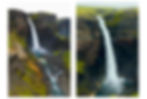
If you’re venturing into the Highlands, Háifoss is one you don’t want to miss.
Getting down to the base does take a bit of effort. It’s about a 2.7-mile roundtrip hike, and the hardest part is definitely the climb back out of the canyon with around 672 feet of elevation gain.
If you’re not a big hiker, you can still see Háifoss from above with a short walk from the parking lot. But I would definitely recommend doing the full hike if you can. It gives you a completely different perspective and really shows just how massive this waterfall is.
Háifoss is the fourth tallest waterfall in Iceland, standing at about 400 feet tall and fed by the Fóssa River. It’s located in the Þjórsárdalur Valley in South Iceland, and since it’s in the Highlands, you’ll need a 4x4 to get here.
The road in is pretty rough, but that’s pretty typical for the Highlands!
3) Brúarfoss
Although Brúarfoss is not the mightiest waterfall of the bunch, it sure is the bluest! The electric blue color you may have seen online is really what you'll see in person.
You might think Brúarfoss means “blue waterfall”, but it actually means “Bridge Falls.” There used to be a natural stone bridge over the river, but it was destroyed in 1602 to prevent hungry travelers from reaching a nearby town during a famine.
Brúarfoss used to be a bit of a trek to get to, with around a 4-mile roundtrip hike just to see it. But thanks to the new parking lot, you can get there in just a 5 minute walk. If you want to go the adventurous route, you can still do the longer hike along the river, which is absolutely beautiful and gives you a chance to see a few smaller waterfalls along the way.
The color of the water comes from meltwater from the Langjökull glacier, which gives it that unreal blue shade you won't see in many other parts of the world.
Brúarfoss is located along the Golden Circle, so it’s a super easy stop to add to your route.

4) Seljalandsfoss
If you’re exploring Iceland’s South Coast, you’ll most likely end up at Seljalandsfoss. It’s one of the main highlights in this region, and for good reason.
Seljalandsfoss drops about 200 feet, and what makes it so unique is that you can actually walk behind it! Standing behind the waterfall with the water rushing down in front of you is such a cool experience and something you don’t get to do very often.
Fun fact: Seljalandsfoss actually marks where Iceland’s coastline used to be!
Since it’s one of the most popular waterfalls in Iceland, it can get very busy. Going early in the morning or later at night is your best bet if you want to avoid the crowds.
If you’re visiting in the summer, seeing Seljalandsfoss during the midnight sun should 100% be on your bucket list!
Visiting Seljalandsfoss almost feels like a rite of passage when coming to Iceland, so it’s definitely not one you want to miss.

5) Gljúfrabúi
If you’re visiting Seljalandsfoss, you can’t miss its neighbor, Gljúfrabúi. Just a short 5-minute walk away, this waterfall is hidden inside a mossy, narrow gorge. And in case you’re wondering, Gljúfrabúi literally means “Gorge Dweller.”
The waterfall drops about 131 feet, and even though it’s right next to Seljalandsfoss, the two actually come from completely different rivers.
Since Gljúfrabúi is tucked inside a gorge, you will get very wet. But that’s all part of the experience :)
Definitely make sure you have waterproof clothes for this one. And if you’re trying to get a good photo, there’s a large boulder right next to the waterfall that you can climb onto and stand on.
Because of its unique setting, Gljúfrabúi is easily one of the most memorable waterfalls in Iceland.

6) Glymur Waterfall
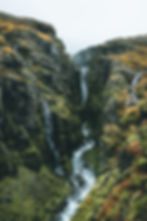
Glymur Waterfall is not the easiest to get to, but if you’re up for the adventure, it’s easily one of the most rewarding waterfalls in Iceland.
Standing at around 650 feet tall, it’s the second tallest waterfall in the country. The water plunges straight down into Glymsgljúfur, a narrow canyon carved by the Botnsá River, and the views along the way are just as impressive as the waterfall itself.
To get here, you’ll need to hike about 4.5 miles roundtrip with around 1,400 feet of elevation gain.
Along the way, you’ll cross a river on a log and use a handline to steady yourself, which might sound a bit intimidating, but it actually ends up being one of the most fun parts of the hike.
This is definitely one of the most exciting waterfalls on this list, and part of what makes it so memorable is the entire experience of getting there.
Glymur is best visited in the summer months, as the trail can become dangerous in other seasons due to ice, steep drop-offs, and river crossings. It’s also not too far from Reykjavík, making it a great hike to add if you’re looking for something a little more off-the-beaten-path nearby.
7) Dynjandi
If you end up making your way into the remote Westfjords, then Dynjandi is a must-visit! It's one of the top spots to see in the Westfjords, but not many people get to see it since most never venture into this part of the country.
Often called the "Jewel of the Westfjords", Dynjandi is the largest waterfall in this region. It's 328 feet tall and 196 feet wide at the base... which is HUGE! Once you see it in person, you will really appreciate the size.
But being big isn't what makes Dynjandi so unique. It's actually a seven-tiered waterfall! And when you visit, Dynjandi isn't the only waterfall you'll be seeing. There are six smaller waterfalls downstream and along the trail.
To reach the base of Dynjandi, it's only about half a mile each way. It's very low effort for such a big reward! If you didn't want to walk all the way to the base though, you can still see it from the parking lot, which also has picnic tables.
You probably don't have a picnic spot with these views at home!

8) Goðafoss
Located in North Iceland, Goðafoss is one of the main stops along the popular Diamond Circle Route.
The name Goðafoss means "Waterfall of the Gods" and comes with a really interesting backstory. When Iceland converted to Christianity, it was said that a pagan law speaker threw his statues of Norse Gods into the waterfall to symbolize Iceland's change of faith.
Other than being one of Iceland's most historical waterfalls, Goðafoss is incredibly beautiful! It has a horseshoe shape that's 98 feet wide and drops 39 feet, giving it a completely different look compared to many of the taller, narrow waterfalls in Iceland.
There are two main viewpoints for Goðafoss, you can see it from both above and below. I would highly recommend seeing it from both views, but my personal favorite was walking down onto the rocks along the river for a closer look.
9) Dettifoss
Also located in North Iceland is Europe's most powerful waterfall, Dettifoss.
Just to give you an idea of how powerful Dettifoss is, it can move about 500 tons of water every second, which is like dropping 100 elephants over the edge… every single second.
In my opinion, Dettifoss is a waterfall you have to see at least once in your life. And if you're in Iceland, this is one you absolutely cannot miss.
The great part about Dettifoss is that it’s not too far from the Ring Road. You can view it from two different sides, but if you’re looking for the easiest access, the west side is your best option.
The east side gets you much closer to the waterfall, but it does take a bit longer to reach since it’s on a rough gravel road.
No matter which side you choose, you'll be met with some pretty epic views!

10) Múlafoss (Múlagljúfur Canyon)
It’s honestly hard to put this place into words, just because I have never seen anything like it before.
Múlafoss is the waterfall located at the end of Múlagljúfur Canyon, and the hike to get here will probably end up being one of your favorite experiences in Iceland.
The entire canyon feels unreal. You’re surrounded by mossy cliffs, waterfalls flowing down from every direction, and views that look almost mythical.
At the very end of the hike, you’ll reach Múlafoss, a waterfall with several drops, the largest being around 176 feet.
The waterfall is fed by the Öræfajökull glacier, which sits directly behind the canyon. If you hike far enough, you’ll even see it peeking over the cliffs in the distance.
We ended up spending around 4 hours here, hiking and just taking it all in, and it still didn’t feel like enough.
With that being said, you don’t have to do the full hike to enjoy it. Even hiking part of the trail (around 45 minutes or so) will still give you incredible views of the canyon and waterfalls.

11) Svartifoss
Located in Vatnajökull National Park is the stunning Svartifoss.
Svartifoss means "Black Waterfall", not because of the water color, but because it's surrounded by a curtain of black basalt columns.
You do have to put in a little work to get here, but it's completely worth it! From the Skaftafell Visitor Center, it's about a 2 mile roundtrip hike with about 400 feet of elevation gain to see this 80ft waterfall.
Overall, it’s a pretty easy hike, and the path is well-maintained. You'll even pass by a few other waterfalls along the way, so that's a bonus!
Once you get there, the contrast between the dark columns and the white water makes it one of the most photogenic waterfalls in Iceland.

12) Gullfoss
If you're already driving the Golden Circle, chances are Gullfoss is already on your route since it's one of the main highlights.
The Hvítá River has a golden hue when the sunlight hits it, which is how it got the name Gullfoss, or "Golden Falls". Some legends even say a Viking threw his chest of gold into the waterfall to prevent anyone from getting his riches when he died, which is another way it could've gotten its name.
Gullfoss is actually a two-tiered waterfall, with the first drop being 36 feet and the second 69 feet. Although this isn't one of the tallest waterfalls in Iceland, it is one of the most powerful! On average, it moves about 140 tons of water over the edge every single second.
That alone should make you want to see it for yourself!
There are two different viewpoints to see Gullfoss. The upper viewpoint gives incredible views of both tiers, while the lower viewpoint brings you closer to the water (I prefer the lower observation area). The closer to the water, the better!

13) Hengifoss
Tucked into a gorge in Eastern Iceland is the country's third tallest waterfall, Hengifoss, which stands at 420 feet.
The height actually isn't even the main reason for visiting, it's the cliffs surrounding the waterfall. The red and black layers you’ll see are unlike anything else in Iceland.
The dark layers come from ancient lava flows, while the red bands formed during dormant periods when ash and soil accumulated and were later oxidized, giving them their deep rust color.
What makes Hengifoss even more special is that it's not just a roadside stop. You have to hike just a little over 3 miles roundtrip with an elevation gain of about 900 feet, so it's not as busy as the other waterfalls.
On the way up, you'll also find Litlanesfoss, a basalt column waterfall, which could really be a stop on its own :)

14) Kirkjufellsfoss
If you've ever seen the waterfall photo with the green mountain in the background that almost looks like a witch's hat, this is the spot!
Kirkjufellsfoss is a small set of three waterfalls sitting right in front of Kirkjufell, which is one of the most recognizable mountains in Iceland. Somehow it looks even better in person than it does in the photos.
This is also one of the best spots in Iceland for photography. Whether you’re visiting during the midnight sun or hoping to catch the northern lights in the winter, the view is spectacular at any time of day.
One of the best parts about Kirkjufellsfoss is that it's so easy to get to. It’s just a short walk from the parking lot, so you don’t have to hike far at all to get amazing views.
Only in Iceland would you get views like this so close to a main road!
Kirkjufellsfoss is located on the Snæfellsnes Peninsula, and it’s a very easy detour from the Ring Road if you’re exploring this part of Iceland.

15) Aldeyjarfoss
And last, but definitely not least, is Aldeyjarfoss. It's one of the few on this list that's still a hidden gem, which is why I saved it for last!
Although Aldeyjarfoss is only 66 feet tall, it's surrounded by basalt columns and drops into bright blue glacier water.
It almost feels like a mix between Svartifoss and Brúarfoss.
Aldeyjarfoss is located in the Northern Highlands, so you’ll need a 4x4 to get here. But if you don’t have one, you can park before the F-road and hike about an hour in, which is 100% worth it.
Because not many people know about Aldeyjarfoss (yet), you have a very high chance of having this place all to yourself, which is a rarity in Iceland nowadays... so enjoy it!

Planning Your Iceland Waterfall Itinerary
Hopefully this guide helped you figure out which waterfalls you want to add to your Iceland itinerary… or maybe even convinced you to try and see all of them!
No matter how much time you have, Iceland makes it really easy to build an incredible trip around waterfalls. Some are quick roadside stops, while others are full experiences that will end up being the highlight of your trip.
If you’re still planning your Iceland trip and want help putting everything together, make sure to check out our Complete Iceland Guide for even more tips, over 330 pinned locations, 10 ready-to-go itineraries, and everything you need to know before you go.