


Everything You Need to Know Before You Go to Iceland

Updated: Mar 29
The moment I first saw Iceland on social media, I just knew I had to go. It had been at the very top of my bucket list for years, and by the time July 2025 came around, I thought to myself, well I'll just have to wait til next year. Little did I know that we were about to be on the trip of a lifetime in less than two weeks!
On a whim, Logan and I decided to book the flights and head to one of Europe's most beautiful countries. With little to no plan and not very much time to work out the details, I’d say we did pretty well… because we now both call Iceland our favorite country in the world.
Fast forward to now, I have spent hundreds of hours researching, and of course, our time spent there learning everything there is to know about Iceland. It’s truly one of the most fascinating places we’ve ever been!
So before you decide to spontaneously book your trip to Iceland, here's everything you need to know before you go!
And if you're still questioning if Iceland is worth a visit, make sure to read the 10 Reasons Iceland Should Be on Your Bucket List first.

Where is Iceland?
Iceland is actually located in Europe, sitting in the North Atlantic Ocean just east of Greenland and northwest of the UK. It’s also known as one of the most remote countries in Europe, which just makes it that much more special when you arrive.
It’s also incredibly close to the Arctic Circle, which is why you’ll get to experience natural phenomena like the midnight sun in the summer and the Northern Lights in the winter.
And fun fact, even though it’s called Iceland, it’s not just a cold, icy island (that would be its neighbor, Greenland ). In the summer, everything is lush, green, and absolutely breathtaking.
How to Get to Iceland From the USA
There are multiple daily direct flight options to Iceland from the United States, including major airports like New York, Boston, Chicago, Seattle, Orlando, Denver, and Dallas.
If you’re flying from the East Coast, the flight is honestly way shorter than you’d expect, usually around 5–6 hours. So about half the amount of time it takes to get to the majority of Europe.
You will most likely be flying overnight, which we actually didn’t mind at all because it helped us adjust to the time change right away. I wouldn’t say we landed feeling fully refreshed (I mean who does on a redeye? And if you do, I'm jealous!), but we were definitely ready to get off the plane and start exploring!
All international flights arrive at Keflavík International Airport (KEF), which is about 45 minutes from Reykjavík, the capital city.
Since we're from South Florida, our best option was to fly out of Orlando, but we actually chose to fly into New York City and stay for a few days before flying directly from JFK into Keflavík. Boston and New York usually have the best flight prices, and doing a stopover in New York ended up saving us thousands!!

What Are Some Basic Facts About Iceland?
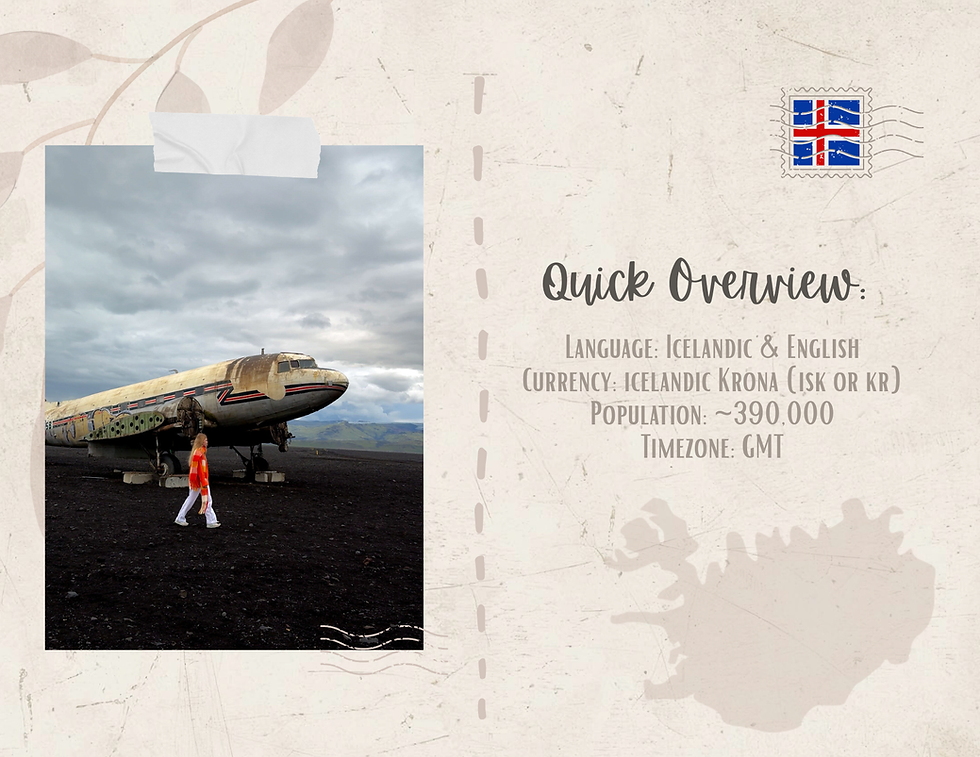
The official language spoken in Iceland is Icelandic, but English is widely spoken throughout the country. After road tripping around the Ring Road and various other parts of the country, we didn't meet a single local who didn't speak English. In fact, 98% of Icelanders speak English, and almost all of them speak it fluently! So, in short, Google Translate is not something you need to worry about here.
Iceland has a very small population, with only about 390,000 residents, and around 247,000 of those live in the Reykjavík area. So yes, it’s very common to see more sheep than people when you’re traveling outside of the city.
The official currency in Iceland is the Icelandic Krona (ISK or kr), which converts to $0.008 USD. It's easier to think about it as $1 USD is 124 ISK.
Iceland's timezone is GMT (with no daylight savings). Compared to EST (New York), Iceland is 5 hours ahead in the winter and 4 hours ahead in the summer.
Iceland has been consistently ranked the safest country in the world since 2008, making it a perfect destination for solo travelers, couples, and families.
Best Time to Visit Iceland
There really is no right answer to this! Iceland is a magical destination year-round, but the time you choose to go will definitely define how your trip will go. Here's a quick breakdown of the best times to visit Iceland:
Summer
If road tripping Iceland has been on your bucket list (which it 1000% should be), summer is hands down the best time to go.
This is when you’ll be able to drive the full Ring Road, explore the Highlands, and visit more remote places like the Westfjords without worrying about road closures. Plus, this is when Iceland gets that dreamy, lush green look you’ve probably seen all over Instagram.
You’ll also get to experience the midnight sun, which is a bucket list experience in itself. The sun barely sets, which means you can be out exploring at 11pm and it still looks like golden hour.
Oh, and this is also puffin season :)
Despite what you might think, Iceland is not warm, even in summer. Expect temperatures in the 40s–60s, and yes… it can still be windy and rainy (because Iceland loves to keep you on your toes!) But you will have the best chance of good weather during the summer months.

Winter
If the northern lights are something you really want to see, then winter is the time to go.
This is the time of year that Iceland feels like a true winter wonderland. You'll see snow-covered waterfalls, icy black sand beaches, and frozen landscapes all around the country.
And of course, the northern lights are the main reason for going to Iceland during winter. There really is nothing like seeing them dance across the sky with your own eyes.
But with that being said, winter in Iceland can be a lot more unpredictable and definitely requires more planning.
Road conditions can be icy, the weather can change quickly, and certain areas (like the Highlands) are completely inaccessible during this time. You’ll also have much shorter daylight hours, sometimes even only 4–6 hours of light.
That definitely doesn’t mean you shouldn’t go though. It just means your trip might look a little different. Instead of a full Ring Road trip, most people stick to the South Coast and Golden Circle, which are still absolutely incredible.

How Many Days Do You Need in Iceland
You could spend anywhere from a few days to a couple of weeks in Iceland! There really is no shortage of things to do. I know that's probably not the answer you're looking for, so here’s a better breakdown depending on how much time you actually have:
3-5 Days in Iceland
If you're short on time but still want to see a lot, this is honestly a great option. You’ll have enough time to explore the South Coast or the Golden Circle, along with Reykjavík. It’s a really good quick trip, especially if it’s your first time.
7-10 Days in Iceland
If you can make this work, I would definitely recommend it. This gives you enough time to drive the full Ring Road, which is honestly the best way to see Iceland. And if you have closer to 10 days, you won’t feel like you’re rushing from place to place the whole time.
10+ Days in Iceland
This is where you can really get the full Iceland experience! You can still do the Ring Road, but also add places like the Highlands or the Westfjords, plus you can take your time!
Do You Need to Rent a Car in Iceland?
If you plan on going anywhere outside of Reykjavík, you should 100% rent a car.
You can do Iceland with a tour, but I honestly wouldn’t recommend it. You’re on a set schedule, you’re always with a big group, and every stop feels kind of rushed.
One of the best parts about Iceland is just driving and pulling over whenever you see something crazy (which will happen a lot more than you think). And you just can’t really do that on a tour.
Having a car just makes everything way more fun and spontaneous.

What to Expect When Driving in Iceland
For the most part, driving in Iceland is actually pretty easy!
Both the Ring Road and Golden Circle are fully paved, so if that’s what you’re sticking to, you really don’t need to stress. But once you start heading into more remote areas like the Highlands or the Westfjords, that’s when things can get a little more intense.
You’ve probably heard about Iceland’s F-roads, and while some of them aren’t bad at all, others can be a lot more challenging than they look. You’ll need a 4x4 (the bigger the better is the saying in the Highlands), and your rental company has to approve it. If not, you’ll be dealing with a pretty hefty fine, so it’s definitely something to take seriously.
One thing we did not expect though… the wind. It is actually insane! You have to be careful opening your car door, or it could get ripped off the hinges.
You’ll also run into sheep in the road all the time, and there are stretches where you won’t see a gas station for a while, so don’t wait until the last minute to fill up.

How Expensive is Iceland?
Iceland is by far the most expensive country we have ever been to. And it is consistently ranked as one of the most expensive countries in the world to travel to, so just know going into it that it won't be a cheap trip by any means.
Because of Iceland's remote location, nearly everything is imported, which in turn makes everything expensive. If you're a mid-range traveller, you should expect to spend anywhere between $2,500-$4000 USD per person on a 7-10 day trip, and that's not even including flights.
Also, if you're expecting to go to an American chain restaurant to save some money... think again. We paid $20 for a 6-inch sub from Subway in Reykjavík (don't judge, I love me a good Subway sub). But that's what you will see all across the country, even at the more local spots.
Helpful Tip: You will find the best food deals at grocery stores
Once you start adding up food, rental car or campervan (and don’t forget insurance), hotels, parking, and everything else, it definitely adds up to a few thousand dollars. But I must say, it's completely worth it!
What to Pack for Iceland
No matter what time of year you visit Iceland, you’ll want to bring warm clothes. Even in the summer, it can still be in the 40s, especially near waterfalls or along the coast.
The weather can also change really quickly, so layering is going to be your best friend. You might have sunshine one minute and rain the next.
At the very least, I would make sure you have a good waterproof jacket, comfortable shoes (preferably waterproof), and a few warm layers you can throw on throughout the day.
If you're going in winter, make sure you have a warm insulated jacket, lots of layers, a beanie, mittens, and a scarf.
If you're planning on exploring waterfalls, make sure to check out our full Iceland waterfall guide!

Some of the links in this post are affiliate links. If you end up booking something through them, it helps us keep creating free guides like this at no extra cost to you!
Where to Stay in Iceland
Iceland is a lot more spread out than you might expect. There aren’t a ton of big cities, but there are a few main areas we’d recommend depending on your route.
Reykjavík: This is Iceland’s capital and the biggest city in the country. It’s a great place to stay at the beginning or end of your trip, especially if you want good food, coffee shops, and a little bit of nightlife.
Compare prices for hotels in Reykjavík: Expedia | Booking.com | Hotels.com
Vík: Vík is a small town along the South Coast and one of the most popular places to stay when road tripping Iceland. It’s close to some of the most famous spots like Reynifjara Beach, Skógafoss, and the Dyrhólaey cliffs.
Compare prices for hotels in Vík: Expedia | Booking.com | Hotels.com
Höfn: Höfn is a quiet coastal town in southeast Iceland and a great place to stay if you’re heading to or from Jökulsárlón Glacier Lagoon. It’s known for its views, fresh seafood, and being a peaceful stop along the Ring Road.
Compare prices for hotels in Höfn: Expedia | Booking.com | Hotels.com
Egilsstaðir: Egilsstaðir is the main town in East Iceland and one of the best places to stay in this part of the country. It’s a good stopping point if you’re driving the full Ring Road and want somewhere comfortable before continuing your trip.
Compare prices for hotels in Egilsstaðir: Expedia | Booking.com | Hotels.com
Akureyri: Akureyri is the largest town in North Iceland and kind of feels like a smaller version of Reykjavík. It has great restaurants, shops, and is a perfect base for exploring northern Iceland.
Compare prices for hotels in Akureyri: Expedia | Booking.com | Hotels.com

Must-See Places in Iceland
If I could list off every place in Iceland, I probably would! Everywhere in Iceland is beautiful. But if it’s your first time visiting, these are some of the must-see places in Iceland you don’t want to miss:
Skógafoss: One of the most popular waterfalls in Iceland, Skógafoss is massive, powerful, and almost always has a rainbow in front of it. You can walk right up to the base or climb the stairs for an incredible view from above.
Dettifoss: Known as the most powerful waterfall in Europe, Dettifoss is absolutely insane to see in person. The sheer force of the water makes this one of the most unique waterfalls in Iceland.
Stokksnes: This is the most underrated and most beautiful black sand beach in Iceland. From here you can get incredible views of the Vestrahorn.
Múlagljúfur Canyon: One of Iceland’s best hidden gems, this canyon hike leads to breathtaking views over waterfalls and the river below. It makes you feel like you have become a part of the Jurassic Park movies.
DEIG Bakery: If you're stopping in Reykjavík, you have to go here. They're known for their croissants and pastries, and yes, it's completely worth it!
Brúarfoss: This bright blue waterfall is a lot smaller than some of the others, but the color alone makes it one of the most unique waterfalls in Iceland.
Landmannalaugar: Famous for its colorful mountains and hiking trails, Landmannalaugar is one of the most beautiful landscapes in Iceland. Just note that you’ll need a 4x4 vehicle to get here.
Þingvellir National Park: A UNESCO World Heritage Site where you can literally walk between two tectonic plates. It’s also part of the famous Golden Circle route.
Hallgrímskirkja: This church in Reykjavík is one of the most recognizable landmarks in Iceland. You can go to the top for panoramic views over the city.
Jökulsárlón Glacier Lagoon: A must stop on the Ring Road, especially if you've never seen a glacier lagoon before. Giant icebergs float through the lagoon and wash up on the nearby black sand beach (Diamond Beach).
For over 330 locations in Iceland, including waterfalls, hotels, restaurants, and hidden gems, plus 10 ready-to-use itineraries and even more Iceland tips, make sure to check out our Complete Iceland Guide!
Use code ICELAND20LA for 20% off :)
Campervan vs Hotels in Iceland
This is one of the biggest decisions you’ll make when planning your trip.
If you prefer having everything planned out ahead of time and knowing exactly where you’re staying each night, then hotels are probably the better option for you.
But if you want more flexibility, we would 100% recommend doing a campervan.
It makes your trip feel way more exciting, since you can decide where to stop, how long to stay somewhere, and where you want to end your day without being locked into a reservation.
It also makes planning a lot easier, because you don’t have to figure out the “perfect” place to stay every single night.
And on top of that, you’re basically combining your car and accommodation into one, which can help save money too.
Is Iceland Worth Visiting?
Short answer... yes, 100%.
Iceland is one of the few places that will exceed every single expectation you had, even if your expectations are already high! There really is nowhere else in the world like it.
Whether you're going on a short visit to the city or doing a full Ring Road adventure, Iceland is a destination you need to visit at least once in your life.
Ready to go to Iceland?
Did you find these tips helpful? Let us know your Iceland plans in the comments! :)
Pin it:


Comments