


Our Complete Death Valley National Park Guide: Best Things to Do & See

Updated: Apr 6
Death Valley National Park is one of the most unique places in the country and one of the most underrated in the entire National Park System. If you’re looking for the best things to do in Death Valley National Park, you might be surprised by just how much there is to see here.
Between the salt flats, canyons, sand dunes, and mountain overlooks, this park has so much more variety than most people expect. In this guide, we’re breaking down the top things to do in Death Valley National Park, along with where to stay, when to visit, and what to know before you go to one of the most beautiful places in the Southwest.

Quick Facts About Death Valley National Park

Official Park Map
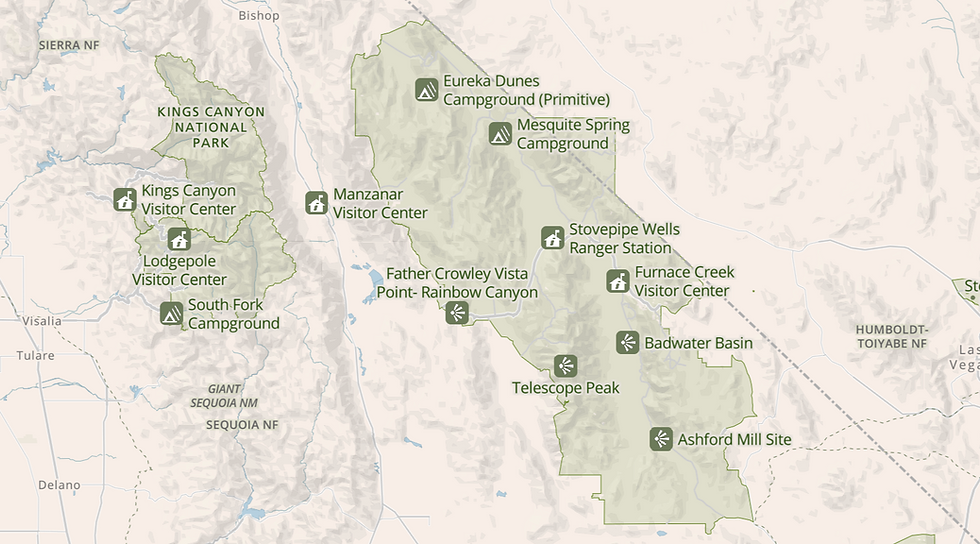
The Ultimate Guide to Exploring Death Valley National Park
Death Valley National Park has become one of the must-see national parks in the United States and continues to grow in popularity each year. It holds some of the most impressive records of any park, it’s the hottest, driest, and lowest national park in the country. Its crown jewel is Badwater Basin, the lowest point in North America, stretching for miles across white salt flats.
People visit from all over the world to explore Death Valley’s diverse landscapes, from the colorful hills along Artist’s Drive to the golden sand dunes near Stovepipe Wells. It’s also one of the best parks for stargazing thanks to its dark skies and remote location. In our opinion, Death Valley is one of the most fascinating and underrated national parks in the entire U.S.

When to Visit Death Valley National Park
Death Valley is open year-round, but the time of year you visit will completely change your experience.
Winter: Our favorite time to visit. The days are cool and comfortable, usually in the 60s and 70s, and the park is much quieter. You can hike and explore without worrying about the extreme heat, and the light during winter sunsets is incredible.
Spring (March–April): Temperatures start to climb, but mornings and evenings are still comfortable. This is also when you might see wildflowers if the park has had enough rain, a short-lived but beautiful sight.
Summer (May–September): We’d personally avoid visiting during summer. Temperatures can reach well over 115°F (46°C) and can even hit 120°F, which makes hiking dangerous and uncomfortable. If you do visit, stick to sunrise or sunset hours and always carry more water than you think you’ll need.
Fall (October–early November): Cooler weather returns, and the crowds are much smaller. It’s a great time for scenic drives, photography, and stargazing once the sun goes down.
Weather in the desert is very different from most places, the temperature can drop more than 30°F (17°C) between day and night. Even if it’s warm during the day, bring layers for the evening because nights can get surprisingly cold.
And it’s worth saying, the summer heat in Death Valley is no joke. Each year, visitors underestimate it, and unfortunately, some have lost their lives due to dehydration and extreme temperatures. Always take the warnings seriously, plan ahead, and never explore without plenty of water and shade.
If you’re day-tripping from Las Vegas, don’t miss our Las Vegas Guide for First-Timer's, it’s packed with things to do, where to stay, how to get around, and more during your visit!

Most Iconic View in Death Valley National Park
Choosing the most iconic view in Death Valley is tough because there are several spots that truly define the park’s landscape. For us, Badwater Basin (pictured below) is the one that instantly comes to mind, the endless white salt flats are unlike anywhere else on Earth.
That said, many visitors would probably argue that Zabriskie Point or Dante’s View are just as iconic, each offering completely different perspectives of the valley. No matter which viewpoint you visit, you really can’t go wrong, every corner of Death Valley has something that’ll leave you in awe.

Must-Do "Easy" Death Valley Activities
There are plenty of accessible and “easy” things to do in Death Valley National Park. Despite its intimidating name, many of the park’s best sights can be reached by car or short walk, making it perfect for visitors who want to see the highlights without strenuous hiking. Here are some of the best easy stops to add to your Death Valley itinerary:
Walk the Badwater Basin Salt Flats
Badwater Basin is one of the most famous spots in Death Valley, and the lowest point in North America at 282 feet below sea level. The short walk from the parking area takes you right onto the vast salt flats, where you can wander across the hexagon-shaped patterns formed by nature. It’s flat, surreal, and one of those “bucket list” moments that’s easy for anyone to experience.
See the Colors Along Artist’s Drive
Artist’s Drive is a one-way, nine-mile scenic loop that winds through some of the most colorful hills in the park. The highlight is Artist’s Palette, where mineral deposits have painted the landscape in shades of pink, green, and purple. You can pull over at various viewpoints or walk a short distance for photos, it’s one of the most photogenic (and accessible) drives in Death Valley!
Catch Sunrise at Zabriskie Point
If you only see one sunrise in Death Valley, make it at Zabriskie Point. The viewpoint is a short walk from the parking lot and overlooks a maze of golden badlands that glow in the early morning light. It’s one of the easiest yet most rewarding stops in the park.
Walk the Mesquite Flat Sand Dunes
Near Stovepipe Wells, the Mesquite Flat Sand Dunes are one of the easiest dune areas to access in the park. You can walk as far or as little as you want; even a short stroll gives you that classic desert experience. Visit early in the morning or around sunset for cooler temperatures and fewer crowds.
Take in the View from Dante’s View
Drive up to Dante’s View for one of the best panoramic overlooks in the park. From here, you can see the entire valley below, including Badwater Basin over 5,000 feet beneath you. It’s accessible by car, and the viewpoint itself is just a few steps from the parking lot.
Go Stargazing at Furnace Creek
Death Valley is an International Dark Sky Park, meaning it’s one of the best places in the world to see the night sky. On a clear night, you can spot the Milky Way with the naked eye. Head to Furnace Creek or Mesquite Flat Dunes for incredible stargazing without even needing a telescope.

Best Death Valley National Park Hiking Trails
Death Valley is home to some of the most unique hiking trails in the entire National Park system. From colorful canyons to salt flats and ridgelines with sweeping desert views, there’s something for every kind of adventurer, whether you want a quick, scenic walk or a more challenging trek. Here are a few of our top hiking picks:
Mosaic Canyon Trail
3.5 miles round-trip, 974 feet of elevation gain
Golden Canyon and Gower Gulch Loop
6.4 miles round-trip, 1,069 feet of elevation gain via Zabriskie Point
Telescope Peak Trail
12.2 miles round-trip, 3,244 feet of elevation gain. Keep in mind that the road leading to the trailhead closes seasonally, and when it's closed, it adds an extra 4 miles round-trip to the hike (see current road closures and conditions here.)
Natural Bridge Canyon Trail
1.4 miles round-trip, 449 feet of elevation gain
Desolate Canyon Trail
3.6 miles, 787 feet of elevation gain
Unlike many other national parks, you won’t find large crowds on most of these trails, which makes exploring here even more enjoyable. Each hike offers a sense of peace and quiet, with views that feel completely untouched, you’ll even find that every trail brings its own unique perspective of the park.
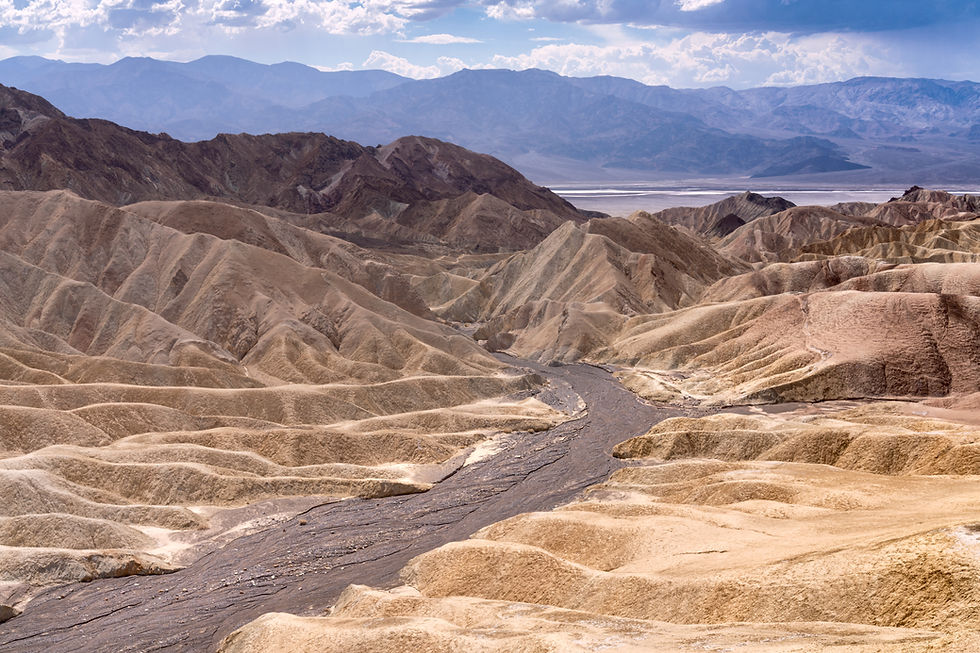
For the Adventurous Death Valley Explorer
There are a lot of unique and challenging adventures within Death Valley National Park. While many visitors stick to the main viewpoints and scenic drives, some of the park’s most rewarding experiences lie far beyond where most day-use travelers go. Because of the park’s size and remoteness, these places require proper planning, preparation, and respect for the conditions.
One of the most well-known adventurous experiences is visiting The Racetrack Playa, famous for its moving stones. Getting there involves a long drive on rough, unpaved roads and a high-clearance 4x4 is strongly recommended. This is one of those places where preparation is not optional, extra water, food, and a spare tire are essential.
For hikers looking for a real challenge, Telescope Peak offers one of the most demanding trails in the park. This strenuous route climbs over 3,000 feet and leads to the highest point in Death Valley, where you can get views of the highest and lowest points in the lower 48. It’s not a casual hike, but it’s incredibly rewarding for experienced hikers.
Another unforgettable option is making the journey to Eureka Dunes, one of the tallest dune systems in North America. Reaching them requires a long drive through remote terrain, but the isolation and scale of the landscape make it one of the most memorable experiences in the park. If you're looking for more of a challenge, you can attempt climbing to the top of the dunes through deep sand!
These more adventurous areas of Death Valley offer a completely different side of the park. If you enjoy exploring beyond the typical stops and are properly prepared, these experiences are well worth adding to your itinerary.

Best Photo Spots in Death Valley National Park
There are endless photography opportunities in Death Valley, and the lighting here can completely change the landscape throughout the day. One of our favorite places to shoot is Badwater Basin at sunrise. The early light highlights the salt patterns and creates soft contrast against the surrounding mountains without the harsh midday glare.
Some more great photography spots include:
Zabriskie Point: Best at sunrise when the light hits the ridges and creates depth across the badlands.
Artist’s Palette: Works well in the late afternoon or blue hour when the colors in the hills appear more saturated.
Mesquite Flat Sand Dunes: Best around sunset when the ridges in the sand create strong texture and softer shadows.
Dante’s View: Great for wide landscape shots and panoramic views, especially just before sunset.
The Racetrack Playa: Best photographed in the morning or early evening when the light is low and less harsh.
Outside of these main viewpoints, there are still endless photography options throughout the park. The shifting light, cracked earth, and subtle color changes across the desert make it easy to find unique compositions if you slow down and look closely!

Where to Stay in Death Valley National Park
Death Valley has a few different lodging options depending on how you like to travel. You can stay inside the park for convenience, camp under the stars, or base yourself just outside the entrance for more flexibility. Here’s a breakdown to help you decide what fits your style best.
Hotels & Lodges (Inside the Park)
The most upscale option in the park, known for its historic feel and beautiful palm-lined grounds. It’s a great choice if you want comfort while still being centrally located.
A more casual and budget-friendly option compared to The Inn. It’s family-friendly and still puts you right in the heart of the park.
A smaller, more rustic stay located inside the park near Mesquite Flat Sand Dunes. It’s a great base if you want quick access to the northern portion of Death Valley!
Located on the western side of the park, Panamint Springs offers simple accommodations with incredible surrounding views and serves as a quieter alternative to Furnace Creek.
All of these options are located within Death Valley National Park, which makes early starts and sunset viewing much easier without long drives.
Camping
If you prefer a more immersive experience, camping in Death Valley is a great option, especially during the cooler months.
The most popular campground in the park and open year-round. It’s centrally located and ideal for exploring most major sights.
First-come, first-served and slightly more scenic, located near Furnace Creek. Open seasonally.
Located toward the northern end of the park, offering a quieter experience and cooler temperatures due to higher elevation.
Always check current conditions and availability before your trip, as summers can be extremely hot and winter nights can get cold. For more campground options, check out the NPS website.
Staying Outside the Park
If you're visiting during peak months or prefer a wider range of hotel options, staying outside the park is possible, but it’s worth noting that Death Valley is extremely remote. Finding a convenient base outside the park can be challenging without committing to long daily drives.
Beatty, Nevada
One of the more popular gateway towns to Death Valley, Beatty sits just outside the park’s eastern boundary. It offers a few hotels, restaurants, and gas stations, but still involves a decent drive to reach many of the park’s main highlights.
Pahrump, Nevada
Located about an hour from one of the park entrances, Pahrump offers more affordable hotels and dining options, making it one of the more common places to stay outside Death Valley.
That said, distances in this region are significant. Many towns are far from the main attractions, and staying outside the park often means spending much more time on the road each day. If you want to make the most of early mornings, sunsets, and cooler exploration hours, staying inside Death Valley is usually the most practical choice.

Getting Around Death Valley National Park
Getting around Death Valley National Park is quite different from many other parks due to its massive size and remote location. Unlike places like Zion or Yosemite, there is no shuttle system here, so having your own vehicle is essential for exploring the park properly. The main attractions are spread far apart, and it’s very normal to spend a significant portion of your day driving between viewpoints, trailheads, and scenic stops.
Most visitors explore Death Valley using a self-guided drive along CA-190, which runs through the heart of the park and connects many of the major highlights like Furnace Creek, Zabriskie Point, Badwater Basin, and Mesquite Flat Sand Dunes. There are also several smaller side roads that lead to areas like Artist’s Drive and Dante’s View.
If you're planning to visit more remote areas such as The Racetrack Playa or Eureka Dunes, a high-clearance 4x4 vehicle is strongly recommended, as these routes involve long stretches of rough, unpaved road with limited services.
Because of the distances and lack of public transportation, it’s important to plan your route ahead of time, fuel up whenever possible, and download maps in advance (cell service is extremely limited). If you're visiting during quieter months, renting a car and using a self-guided driving tour can be a great way to explore the park at your own pace and still learn about the landscape as you go!
Also keep in mind that gas stations are few and far between, so always top off your tank when you have the chance, even if you think you don’t need to yet.

This post contains Amazon affiliate links, as an Amazon Associate, we earn from qualifying purchases if you make a purchase through these links at no extra cost to you. These commissions help support our work and allow us to continue creating free travel resources. We only recommend products we personally use and trust. Thank you for your support!
What to Pack for Death Valley National Park
What to pack for a trip to Death Valley National Park will depend on the time of year, how long you’re staying, and what activities you plan to do. The desert environment is harsh, the sun is intense, and temperatures can change drastically between day and night. These are some essentials that will apply to most visitors:
Hiking day pack: Osprey Packs Manta 24L Backpack (or Peak Design Everyday Backpack if you’re carrying camera gear)
Reusable water bottle / hydration system: Hydroflask Bottle or Hydrapak 2L Water Reservoir (bring more than you think you’ll need)
Wide-brim sun hat: Home Prefer Outdoor UPF 50+ Mesh Sun Hat or similar for full sun protection
Lightweight hiking shoes: ALTRA Lone Peak 8 Trail Running Shoe (women’s), Merrell Moab 3 Hiking Shoe (men’s)
Socks: Icebreaker Cushion Micro Sock (women’s), Icebreaker Cushion Micro Sock (men’s)
Breathable quick-dry t-shirt: Real Essentials Short Sleeve T-Shirts Activewear/Athletic, 5-Pack (women’s), MCPORO Short Sleeve Quick Dry, 5-Pack (men’s)
Lightweight hiking pants: MIER Quick Dry Cargo Hiking Pants (women’s), CQR Lightweight Hiking Pants (men’s)
Hiking shorts: The North Face Aphrodite Short (women’s), The North Face Wander 2.0 Shorts (men’s)
Fleece or light layer (for mornings and evenings): Columbia Benton Springs Full Zip (women’s), Columbia Steens Mountain Half Zip (men’s)
Light wind jacket / sun protection layer: Columbia Arcadia II Jacket (women’s), Columbia Glennaker Lake II Rain Jacket (men’s)
Insulated jacket (cooler months): The North Face Junction Insulated Jacket (women’s), Columbia Tipton Peak Iii Insulated Jacket (men’s)
Headlamp: Petzl Actik Headlamp (especially if exploring at sunrise, sunset, or stargazing)
Sunglasses with UV protection
High-SPF sunscreen & lip balm
Basic first aid kit: Rhino Rescue Medical Kit for Hiking
Offline maps downloaded
Extra water + electrolytes: Liquid I.V. Hydration Multiplier
Portable phone charger
If you’re planning to explore remote areas, consider also packing:
Extra food and water
Spare tire
Tire repair kit
Emergency blanket
Being prepared in Death Valley is not optional (especially if you're going to the more remote areas), the environment is unforgiving, and planning ahead can make your visit not only more comfortable, but safer.

Places to Explore Near Death Valley National Park
Death Valley National Park is surrounded by some incredibly diverse landscapes, making it an amazing addition to a larger California or Southwest road trip.
Some great nearby places to consider adding to your itinerary include:
Alabama Hills
Joshua Tree
Palm Springs
Sequoia National Park
Red Rock Canyon State Park
Valley of Fire
Las Vegas is also just a few hours away and is one of the most popular base cities for visitors heading to Death Valley. If you're flying in, it’s an easy and convenient starting point for your trip. You could even spend a night or two enjoying the city before swapping the lights of the Strip for the quiet desert landscapes of Death Valley. There are also guided day trips available from Las Vegas if you prefer not to navigate the park on your own.

Fun Facts About Death Valley National Park
Death Valley’s lowest elevation is Badwater Basin at 282 feet below sea level, while its highest point is Telescope Peak at 11,043 feet, making it one of the greatest elevation ranges of any national park in the U.S.
Death Valley holds the record for the hottest air temperature ever recorded on Earth: 134°F (56.7°C), measured at Furnace Creek in 1913.
Despite its name, Death Valley supports a surprising amount of life, including desert wildflowers, bighorn sheep, and unique species that have adapted to extreme conditions.
Death Valley is the largest national park in the contiguous United States, covering over 3.4 million acres.
The area was first popularized during the California Gold Rush, when a group of pioneers mistakenly crossed the valley and reportedly coined the name “Death Valley” as they struggled to find water and a way out.
FAQ About Death Valley National Park
How many days do you need in Death Valley National Park?
Ideally, you’ll want at least 2 full days to experience Death Valley without feeling rushed. One day allows you to hit the main highlights like Badwater Basin, Zabriskie Point, Artist’s Drive, and the Mesquite Flat Sand Dunes, but two days gives you time to explore at a slower pace, add in a few hikes, and visit more remote areas. If you’re a landscape lover or photographer, 3 days is even better.
Do you need reservations to enter Death Valley National Park?
No, reservations are not required to enter Death Valley National Park. You can arrive and enter freely at any time. However, if you plan to stay overnight inside the park (hotels or campgrounds), those should be booked in advance, especially during the peak season.
Can you visit Death Valley without a 4x4 vehicle?
Yes, you can absolutely visit Death Valley with a standard vehicle. Most of the park’s major sights, including Badwater Basin, Zabriskie Point, Artist’s Drive, Furnace Creek, and Mesquite Flat Sand Dunes are accessible via paved roads.That said, if you want to explore some of the more remote areas, a high-clearance 4x4 is strongly recommended due to long, rough, unpaved roads.
Are there gas stations inside Death Valley National Park?
Yes, but they are very limited. Gas stations are available at Furnace Creek, Stovepipe Wells, and Panamint Springs, but prices are significantly higher than outside the park due to the remote location. It’s always best to fill up before entering and top off whenever you have the chance.
Is Death Valley National Park safe to visit?
Yes, when you’re prepared. Death Valley is safe for visitors who respect the environment and plan ahead, but the extreme heat and remote conditions should never be taken lightly. The most common issues arise from dehydration, lack of preparation, or venturing into remote areas without proper supplies. As long as you carry plenty of water, avoid hiking in extreme heat, stay on marked roads, and plan your route in advance, Death Valley will be an incredible and safe experience!


Comments