


ULTIMATE Bryce Canyon National Park Guide and Itinerary

Updated: Sep 2
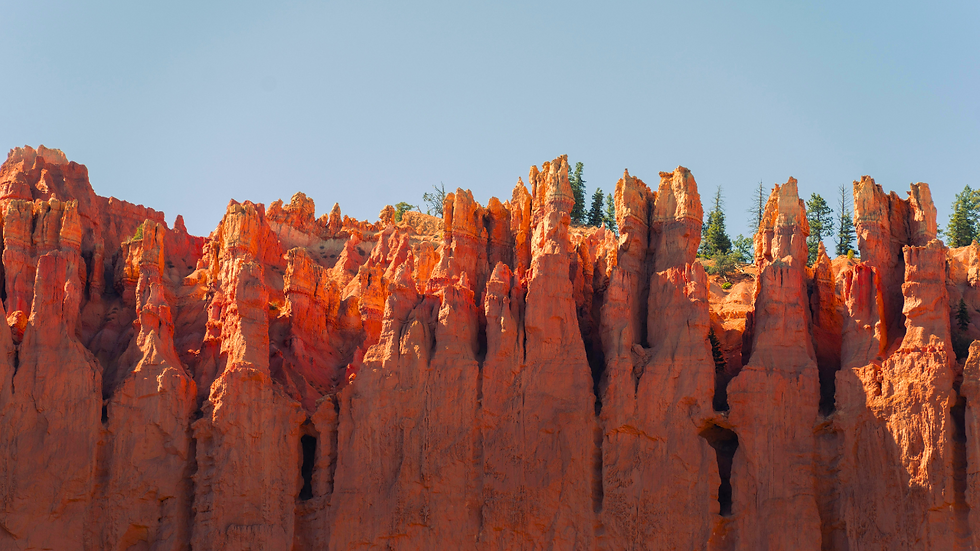
Bryce Canyon National Park feels like stepping into another world. The landscape is filled with thousands of vibrant orange hoodoos, tall, thin spires of rock that rise up from the canyon floor, making the whole park feel otherworldly. What makes Bryce so unique is that you're mostly viewing everything from above, standing on the rim and looking down into this natural amphitheater of color and shapes.
It’s actually the smallest national park in Utah, but it packs in a lot of beauty for its size. You don’t need a ton of time to experience the highlights, which makes it a perfect stop if you’re doing a Southwest road trip or visiting multiple parks on the same trip.
In this complete Bryce Canyon National Park guide, we’re sharing everything you need to know, including where to stay, what to pack, and how to plan the perfect one-day itinerary.

Where is Bryce Canyon National Park?
Bryce Canyon is located in southern Utah, about 1 hour and 45 minutes from Zion National Park and 2 hours from Capitol Reef. It’s a popular stop on the Mighty 5 road trip and can be easily combined with other nearby parks and scenic drives.
The closest town to the park is Bryce Canyon City, which is just outside the park entrance. It’s very small, but it has a few hotels, campgrounds, and restaurants. For more options, Tropic is a short 15-minute drive away and has a bit more variety in terms of lodging and dining.
👉 Planning to see all of Utah’s national parks in one epic loop? Don’t miss our Mighty 5 Road Trip Guide where we share all the details, tips, and itineraries!

Getting to Bryce Canyon National Park
Bryce Canyon is tucked away in southern Utah, but it’s still fairly easy to reach, especially if you’re doing a road trip through the Southwest. Most visitors drive in from places like Zion National Park, Capitol Reef, or Page, Arizona, all of which pair perfectly with a visit to Bryce.
We personally visited as part of our Southern Utah road trip (you can grab our Southern Utah Guide here!), and the drive from Capitol Reef to Bryce was hands-down the most scenic part. Scenic Byway 12, which connects the two parks, is actually listed as one of the most beautiful drives in the entire country.
Closest Airport to Bryce Canyon National Park
If you're flying in, the closest major airport is Salt Lake City International Airport (SLC), about 4 hours away. Las Vegas (LAS) is another popular option, especially if you’re starting your trip in Zion, it’s around 4 hours and 20 minutes from Bryce. Smaller regional airports like Cedar City (CDC) or St. George (SGU) can also be convenient if you're already in the area, though flight availability is more limited.

This post may contain Amazon affiliate links, as an Amazon Associate, we earn from qualifying purchases if you make a purchase through these links at no extra cost to you. These commissions help support our work and allow us to continue creating free travel guides and resources. Thank you for your support!
Getting Around Bryce Canyon National Park
Bryce Canyon is compact and incredibly easy to navigate, which is one of the reasons it’s such a great park to visit, even if you’re short on time. There’s just one main road that runs through the park, with several scenic viewpoints and trailheads located right off of it. You can drive your own car, use the free shuttle (seasonal), or do a mix of both, depending on the time of year.
Bryce Canyon Shuttle System
From mid-April through mid-October, Bryce Canyon operates a free shuttle system that connects the Visitor Center with the park’s most popular viewpoints and trailheads. The shuttle is optional for most visitors (unless you're traveling in an RV or oversized vehicle), but it can be a huge help if parking lots are full, which happens often, especially during the summer. Keep in mind that if you’re visiting between November and March, the shuttle doesn’t run, and you’ll need to drive yourself.
We personally love using park shuttles when they’re available because they can save a lot of time. If you’ve already visited Zion, Bryce Canyon’s shuttle system is much more relaxed and easy to use.
Scenic Drive Tips
The 18-mile scenic drive through the park ends at Rainbow Point, the highest point in Bryce Canyon at 9,115 feet. We recommend driving all the way to the end first, then working your way back toward the entrance; that way, all the viewpoints will be on your right-hand side, making it easier to pull off.
If you’re short on time, don’t worry, many of the best views are in the first few miles near Sunrise, Sunset, Inspiration, and Bryce Points. These are the most popular viewpoints, and they’re all within a 5-minute drive of each other.
Parking at Bryce Canyon
Parking can be a challenge during busy seasons, especially at popular trailheads like Navajo Loop and Queen’s Garden. If you want to guarantee a spot, plan to arrive before 8:00 AM or consider using the shuttle to save time.
We recommend packing a small daypack with everything you need so you’re not going back and forth to the car. You can check out our Amazon Storefront for our favorite national park gear and hiking essentials.

Do You Need Reservations to Visit Bryce Canyon?
No timed entry reservations are required to visit Bryce Canyon, even during the busiest times of year. You can enter the park with a day pass or your America the Beautiful annual pass, no extra booking is necessary.
While reservations aren’t needed, it’s still smart to plan ahead if you’re visiting during peak season. You can purchase your entrance pass in advance on nps.gov to save time at the gate.

Best Time to Visit Bryce Canyon National Park
The best times to visit Bryce Canyon are late spring and early fall. These seasons offer the most comfortable weather, clearer skies, and fewer crowds than the peak of summer. Our personal favorite time to visit is spring, especially April, when it’s not too cold or too hot, and the trails are starting to come back to life after winter.
Summer, particularly July and August, is the busiest season in the park. While daytime temperatures are usually in the 70s and low 80s, the higher elevation keeps mornings and evenings cooler. Crowds can be heavy at the viewpoints and main trails, so if you're visiting during summer, we recommend getting an early start.
Winter in Bryce Canyon is incredibly beautiful, with snow-covered hoodoos creating a completely different kind of landscape. From November through March, visitor numbers drop significantly, making it a peaceful time to explore. However, snow and ice can lead to road and trail closures, and temperatures often dip well below freezing, so be prepared with proper winter gear.
Fall is another great time to visit, especially in late September or early October. The crisp air, golden aspens, and lighter crowds make it ideal for hiking and sightseeing, without the heat or hassle of peak season.
Regardless of when you visit, keep in mind that Bryce Canyon sits at over 8,000 feet in elevation. Even during warmer months, it can get chilly in the mornings and evenings, so it’s always a good idea to bring layers.

What to Pack for Bryce Canyon National Park
Packing for Bryce Canyon depends a lot on the season, but since the park sits at such a high elevation, you’ll want to be prepared for quick temperature changes, even in summer. Whether you're visiting for a few hours or a full day of hiking, there are a few essentials that will make your trip a lot more comfortable.
The sun can be intense, especially on exposed trails like Navajo Loop or Queen's Garden, so sun protection is key. Comfortable hiking shoes with good grip are also important since many of the trails are steep, dusty, or rocky. And if you're visiting in spring, fall, or winter, expect chilly mornings and evenings; warm layers are a must.
Here are some of the essentials we recommend bringing:
Plenty of water (there are refill stations at the Visitor Center, but not much beyond that)
Sunscreen, sunglasses, and a hat
Good hiking shoes or trail runners
Warm layers, especially for sunrise or evening hikes
Snacks or a packed lunch (there’s no food sold inside the park)
Camera or phone with a portable charger
Lightweight daypack
Headlamp or flashlight if you’re planning to catch sunrise or sunset
We use a lot of the same gear for every national park, and if you want to see exactly what we bring with us, check out our Amazon Storefront, where we’ve linked all our favorite hiking and travel essentials.

Where to Stay Near Bryce Canyon National Park
The closest place to stay is Bryce Canyon City, which is just outside the park entrance. It’s small but super convenient, you’ll find a few hotels, campgrounds, and restaurants, and it’s where the park’s shuttle system begins. Staying here gives you the best access to sunrise hikes, especially if you’re trying to get to Sunrise or Sunset Point before the crowds.
If you're looking for a few more options (or something a bit more budget-friendly), the town of Tropic is just a 15-minute drive away. It has a slightly wider range of lodging, including motels, cabins, and Airbnbs with canyon views. We stayed in Tropic and loved having a peaceful place to wind down after a long day of hiking.
For those traveling in an RV or looking to camp, you’ll also find plenty of options both inside and just outside the park.
Camping in Bryce Canyon National Park
There are two campgrounds inside the park:
North Campground: Located near the Visitor Center and open year-round. It’s first-come, first-served in the off-season and reservation-based from mid-May through mid-October. Sites are shaded and walkable to the canyon rim. There are no RV hookups, but there’s potable water and a dump station. Reserve your North Campground site here.
Sunset Campground: Open seasonally (late spring to early fall) and located closer to Sunset Point. It’s entirely first-come, first-served when open and offers similar amenities as North Campground — flush toilets, picnic tables, and fire pits, but no hookups. Reserve your Sunset Campground site here.
If the campgrounds inside the park are full, here are a few nearby alternatives:
Ruby’s Inn RV Park & Campground: Just outside the park entrance, with tent sites, cabins, and full RV hookups. It’s a convenient option with shuttle access and lots of amenities. Reserve Ruby’s Inn Campground here.
Bryce Canyon Pines Campground: About 10 minutes from the park in a more wooded setting. It’s great for a peaceful night with fewer crowds. Reserve Bryce Canyon Pines Campground here.
Kodachrome Basin State Park: Located about 40 minutes from Bryce, this campground is surrounded by red rock spires and offers a quieter experience. It’s a great option if you’re exploring more of Southern Utah. Reserve your Kodachrome Basin State Park Campground here.
BLM Dispersed Camping: If you’re in a campervan or self-contained setup, there’s free dispersed camping available on nearby BLM land; just make sure to follow Leave No Trace and check signage.

How Many Days Do You Need in Bryce Canyon?
You can easily see the highlights of Bryce Canyon in just one day. The park is compact, and most of the main viewpoints and hiking trails are close together, which makes it ideal for a quick 1-2 day stop on a Southwest road trip.
That said, if you have more time, it’s worth staying an extra day to explore lesser-known trails, visit some of the farther overlooks, or do some stargazing, Bryce Canyon is a certified Dark Sky Park and one of the best places in the U.S. to see the stars.
👉 Planning to make a stop at Zion National Park first? Don’t miss our Zion National Park Guide where we share everything you need to know!
Best Things to Do in Bryce Canyon National Park
Even though Bryce Canyon is smaller than the other national parks in Utah, it’s full of beautiful viewpoints and unique hikes that you can’t find anywhere else. Here are some of the best things to do during your visit:
Walk the Rim Trail
The Rim Trail runs along the edge of the Bryce Amphitheater and connects all the major viewpoints. You can walk the entire thing (5.5 miles one way) or just do a short section between Sunrise Point and Sunset Point. The views from the rim are what make Bryce so famous, you’re literally looking down into a forest of red rock hoodoos.
Hike the Queens Garden & Navajo Loop Trail
This is the most popular hike in the park for a reason. It starts at Sunrise Point and takes you down into the amphitheater, where you’ll walk among the hoodoos. The trail connects with the Navajo Loop, which brings you back up to Sunset Point through Wall Street, a narrow, winding canyon. The full loop is about 3 miles and moderately difficult (mainly because of the steep climb at the end), but it’s worth every step.
Stop at Natural Bridge
This is a quick roadside stop on the main scenic drive, a huge arch-like rock formation that’s great for photos. It’s often less crowded than the main amphitheater, so it’s a nice break from the bigger viewpoints.
Drive to Bryce Point & Inspiration Point
These viewpoints are farther along the scenic drive and offer wider views of the park. Bryce Point is one of the highest lookouts and gives you a great perspective of the full amphitheater, especially in the morning. Inspiration Point has layered views and makes for amazing photos.

1-Day Bryce Canyon Itinerary
You don’t need a ton of time to see the best of Bryce. One full day is enough to hit the highlights, especially if you get an early start. Here’s how we recommend planning it:
Start your morning at Sunrise Point, one of the most popular spots in the park. Watching the hoodoos light up as the sun rises is something you won’t forget. Right after sunrise, head straight into the Queens Garden and Navajo Loop Trail, this is Bryce’s most popular hike for good reason (it’s also our favorite hike in the park). The trail takes you down into the canyon through towering orange spires and brings you back up through Wall Street or Two Bridges to Sunset Point.
After the hike, take a break for lunch, there are picnic areas inside the park, or you can head just outside the entrance to grab food in Bryce Canyon City. Once you’re recharged, spend the afternoon driving to the far viewpoints. Start with Bryce Point and Inspiration Point, then continue south to Natural Bridge, Rainbow Point, and Yovimpa Point. Each stop offers a different perspective and makes the scenic drive completely worth it.
In the late afternoon, we recommend walking a section of the Rim Trail, the short, paved path between Sunset and Sunrise Point, is easy and offers beautiful views in the softer light. Then, wrap up your day by watching the sunset at Sunset Point. The way the colors shift across the amphitheater at golden hour is the perfect way to end your time at Bryce.

Final Thoughts on Visiting Bryce Canyon National Park
Bryce Canyon might be one of the smaller national parks in Utah, but it packs in some of the most unforgettable scenery you’ll find anywhere in the U.S. Whether you're doing a full Mighty 5 road trip or just passing through, even one day here is enough to experience it, especially if you hike down among the hoodoos.
If you want more travel tips, behind-the-scenes moments, or real-time updates from the road, make sure to follow us over on Instagram!
FAQs About Visiting Bryce Canyon National Park
Is Bryce Canyon wheelchair accessible?
Yes, several of the main viewpoints like Sunrise Point, Sunset Point, and Inspiration Point have paved, wheelchair-accessible paths. The Visitor Center is also fully accessible.
Is Bryce Canyon open year-round?
Yes, Bryce Canyon is open 365 days a year, though some roads and trails may be closed during winter due to snow or ice. The shuttle only operates mid-April through mid-October.
Are dogs allowed in Bryce Canyon National Park?
Pets are allowed in certain areas, like campgrounds, paved roads, and the paved section of the Rim Trail between Sunset and Sunrise Point. They’re not allowed on most hiking trails. Always keep pets leashed and check current park guidelines before visiting.
Is Bryce Canyon kid-friendly?
Yes! Bryce Canyon is one of the most kid-friendly national parks. Many of the viewpoints are accessible and stroller-friendly, and the shorter hikes like the Mossy Cave Trail or part of the Rim Trail are perfect for families.


Comments